4.2°C
Colder off Porto than off Faro in August (17.3 vs 21.5°C). Same country, different ocean.
NOAA OISST v2.1, average 1991–2020
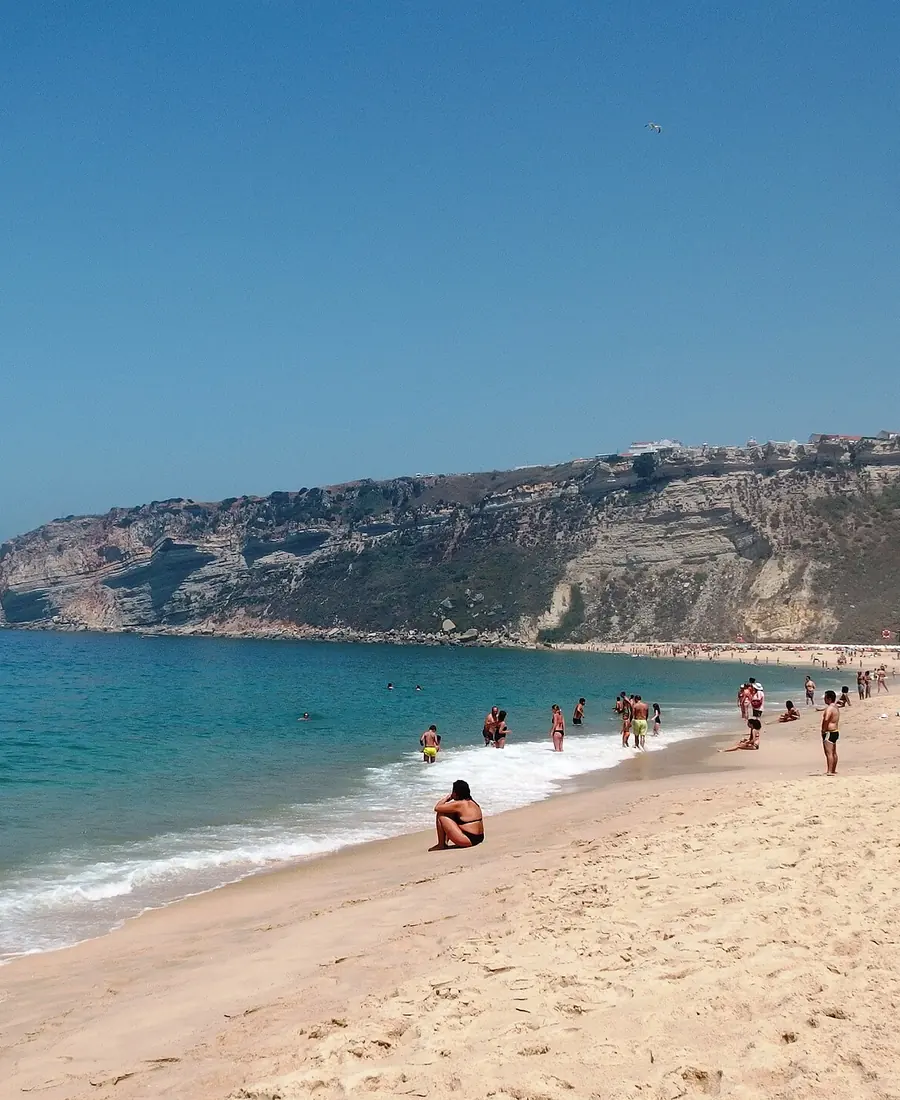
Portugal · sea temperature · updated 30 October 2026
Portugal’s sea is coldest in February and March and warmest in August and September. In August it averages about 17.3°C off Porto, 18.7°C off Lisbon and 21.5°C off Faro. Madeira never drops below 17.9°C and reaches 23.7°C in September.
Today, 30 October 2026IPMA sea forecast
15.2–15.4°CPorto
15.5–15.8°CLisbon
19.6–19.8°CFaro
22.4–23.1°CFunchal
Today the sea off Porto is 4.4°C colder than off Faro.
After twenty years in hotels, from Dublin to the Algarve, I can tell you the question never changes: “how cold is the water?”. The honest answer depends on where you go.
4.2°C
Colder off Porto than off Faro in August (17.3 vs 21.5°C). Same country, different ocean.
NOAA OISST v2.1, average 1991–2020
17.9°C
Funchal in March, the coldest month in Madeira. Still warmer than Lisbon in June (17.7°C).
NOAA OISST v2.1, average 1991–2020
23.2°C
Ponta Delgada in August. In late summer the Azores are warmer than the Algarve (Faro 21.5°C).
NOAA OISST v2.1, average 1991–2020
16.6°C
Navy buoy at Leixões (Porto), June average 2000–2020. Our satellite figure for the same period: 16.6°C.
Instituto Hidrográfico, 27 June 2023
Winter swim? Only Madeira. From December to April the sea off Funchal stays at 17.9–19.9°C, two to three degrees warmer than the Algarve and the warmest water in Portugal. On the mainland you will want a wetsuit.
Average sea surface temperature in °C, 1991–2020, north to south and then the islands. The highlighted column is this month; “Today” is the IPMA forecast.
| Place | Today | Jan | Feb | Mar | Apr | May | Jun | Jul | Aug | Sep | Oct | Nov | Dec |
|---|---|---|---|---|---|---|---|---|---|---|---|---|---|
| North | |||||||||||||
| Viana do Castelo | 15.3 | 13.8 | 13.3 | 13.6 | 14.3 | 15.4 | 16.6 | 17.1 | 17.3 | 17.2 | 16.7 | 15.7 | 14.5 |
| PortoMatosinhos | 15.3 | 13.6 | 13.2 | 13.6 | 14.4 | 15.5 | 16.7 | 17.1 | 17.3 | 17.4 | 16.6 | 15.5 | 14.3 |
| Centre | |||||||||||||
| Nazaré | – | 14.5 | 14.0 | 14.2 | 15.0 | 16.2 | 17.7 | 18.3 | 18.7 | 18.6 | 17.7 | 16.5 | 15.3 |
| Peniche | – | 14.7 | 14.1 | 14.2 | 14.9 | 16.0 | 17.5 | 18.2 | 18.6 | 18.6 | 17.8 | 16.7 | 15.4 |
| Lisbon coast | |||||||||||||
| CascaisLisbon coast | 15.7 | 15.2 | 14.6 | 14.7 | 15.4 | 16.4 | 17.7 | 18.3 | 18.7 | 18.8 | 18.3 | 17.2 | 16.0 |
| Sesimbra | – | 15.4 | 14.8 | 14.9 | 15.6 | 16.6 | 18.0 | 18.5 | 18.9 | 19.0 | 18.4 | 17.3 | 16.2 |
| Alentejo and Algarve | |||||||||||||
| Sines | 17.5 | 15.5 | 14.9 | 14.9 | 15.6 | 16.6 | 18.0 | 18.6 | 19.1 | 19.2 | 18.7 | 17.5 | 16.4 |
| Aljezurwest coast | – | 15.6 | 14.9 | 15.0 | 15.7 | 16.6 | 18.0 | 18.7 | 19.2 | 19.4 | 18.8 | 17.6 | 16.5 |
| Lagos | – | 15.9 | 15.2 | 15.3 | 16.0 | 16.9 | 18.6 | 19.4 | 19.9 | 20.0 | 19.4 | 18.0 | 16.8 |
| Faro | 19.7 | 16.5 | 15.9 | 15.9 | 16.6 | 18.0 | 19.8 | 21.0 | 21.5 | 21.4 | 20.5 | 18.9 | 17.4 |
| Madeira | |||||||||||||
| FunchalMadeira | 22.8 | 18.7 | 18.1 | 17.9 | 18.4 | 19.3 | 20.9 | 22.2 | 23.4 | 23.7 | 22.8 | 21.4 | 19.9 |
| Porto SantoMadeira | 22.7 | 18.4 | 17.8 | 17.6 | 18.0 | 18.9 | 20.5 | 21.8 | 23.0 | 23.4 | 22.6 | 21.1 | 19.5 |
| Azores | |||||||||||||
| Ponta DelgadaSão Miguel | 21.6 | 16.8 | 16.3 | 16.2 | 16.6 | 17.6 | 19.5 | 21.7 | 23.2 | 22.9 | 21.3 | 19.4 | 17.9 |
Satellite and buoy data (NOAA OISST v2.1), 0.25° grid cell nearest to each place, usually 3–13 km offshore. Close to the beach the water can be a degree warmer on a calm afternoon, or colder after days of north wind. “–”: IPMA has no sea forecast for that place.
All five Algarve places, month by month →
Everywhere the winters have run 0.2–0.8°C warmer than the 30-year average. The islands have warmed most, in every season; on the west coast of the mainland the summers have not warmed at all.
| Place | Today | Jan | Feb | Mar | Apr | May | Jun | Jul | Aug | Sep | Oct | Nov | Dec |
|---|---|---|---|---|---|---|---|---|---|---|---|---|---|
| North | |||||||||||||
| Viana do Castelo | 14.2 | 13.7 | 13.8 | 14.8 | 15.9 | 16.8 | 16.9 | 16.9 | 16.9 | 16.8 | 15.9 | 14.8 | |
| Porto | 13.8 | 13.7 | 13.8 | 14.9 | 15.8 | 16.7 | 16.8 | 17.0 | 16.8 | 16.5 | 15.7 | 14.5 | |
| Centre | |||||||||||||
| Nazaré | 14.8 | 14.4 | 14.4 | 15.4 | 16.5 | 17.7 | 18.1 | 18.2 | 18.2 | 17.7 | 16.7 | 15.5 | |
| Peniche | 15.0 | 14.4 | 14.4 | 15.3 | 16.4 | 17.5 | 18.0 | 18.2 | 18.2 | 17.8 | 16.9 | 15.7 | |
| Lisbon coast | |||||||||||||
| Cascais | 15.6 | 15.0 | 14.9 | 15.7 | 16.7 | 17.8 | 18.0 | 18.3 | 18.5 | 18.2 | 17.3 | 16.3 | |
| Sesimbra | 15.7 | 15.1 | 14.9 | 15.9 | 17.0 | 18.1 | 18.5 | 18.7 | 18.8 | 18.2 | 17.4 | 16.4 | |
| Alentejo and Algarve | |||||||||||||
| Sines | 15.8 | 15.2 | 15.0 | 15.8 | 17.0 | 18.0 | 18.4 | 18.7 | 18.7 | 18.4 | 17.6 | 16.7 | |
| Aljezur | 16.0 | 15.3 | 15.0 | 15.9 | 16.8 | 17.9 | 18.2 | 18.6 | 18.8 | 18.6 | 17.8 | 16.7 | |
| Lagos | 16.3 | 15.6 | 15.3 | 16.2 | 17.2 | 18.4 | 19.0 | 19.5 | 19.5 | 19.5 | 18.3 | 17.0 | |
| Faro | 17.0 | 16.4 | 16.1 | 17.0 | 18.3 | 19.9 | 21.0 | 21.4 | 21.2 | 21.0 | 19.4 | 17.9 | |
| Madeira | |||||||||||||
| Funchal | 19.4 | 18.9 | 18.7 | 19.1 | 20.0 | 21.3 | 22.6 | 23.6 | 23.9 | 23.3 | 22.0 | 20.5 | |
| Porto Santo | 19.2 | 18.5 | 18.3 | 18.7 | 19.6 | 20.9 | 22.2 | 23.2 | 23.6 | 23.1 | 21.8 | 20.2 | |
| Azores | |||||||||||||
| Ponta Delgada | 17.4 | 16.8 | 16.7 | 17.0 | 18.1 | 20.0 | 22.1 | 23.9 | 23.6 | 22.2 | 20.0 | 18.5 | |
Switch between the mainland and the islands, tap a month or play the year. Each pin is the 30-year average for that month.
October16.6–22.8°CWarmer than June everywhere
Loading the 3D map…
Why the west coast is so cold: in summer the north wind (the nortada) pushes the warm surface water out to sea and cold water rises from the deep. The south coast of the Algarve is sheltered from it, and the islands sit far out in warmer Atlantic water.
Five very different seas. One honest line on each, and where to stay.
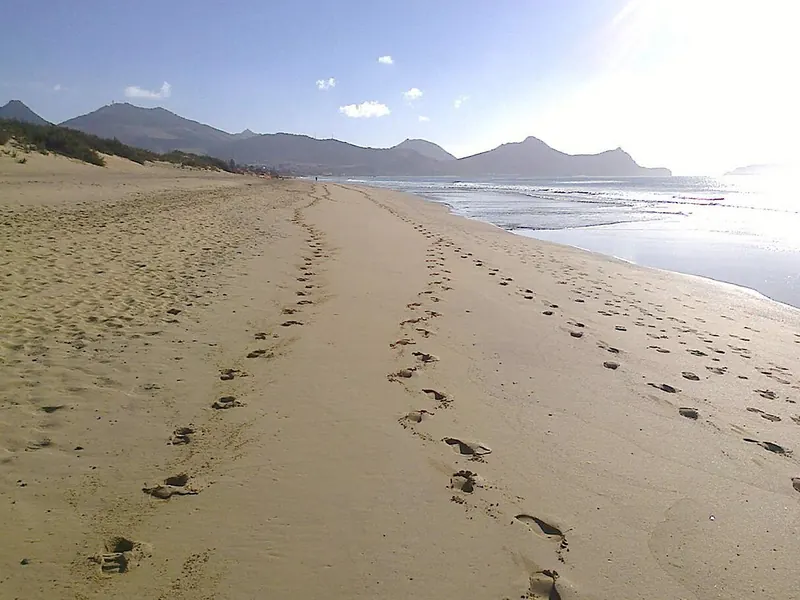 Warmest all yearPorto Santo · Fernandes Paula c, CC BY-SA 4.0
23.7°C in September and never below 17.9°C. Funchal swims from lidos and rocky coves; for sand, take the ferry or the 15-minute flight to Porto Santo’s 9 km beach.
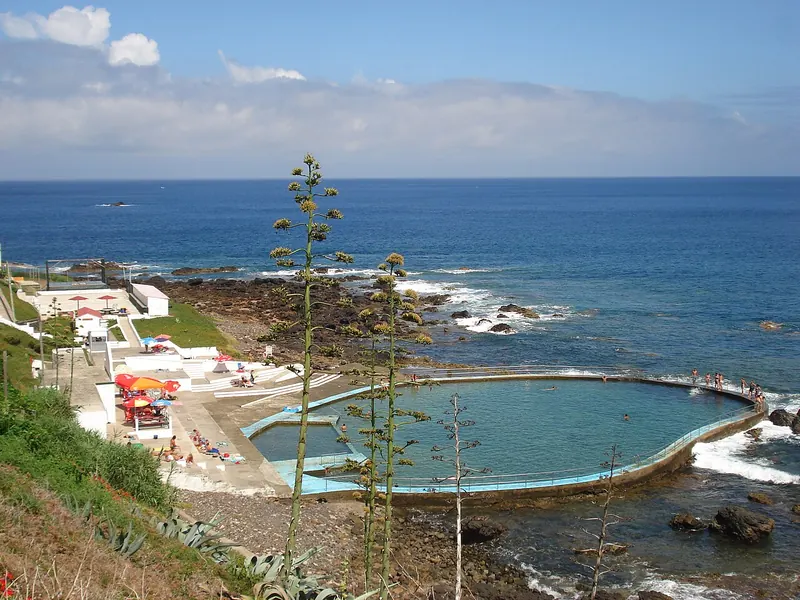 The late-summer surpriseNatural pool, Maia (Santa Maria) · Ruben JC Furtado, CC BY-SA 3.0
23.2°C in August, warmer than the Algarve, then quick to cool. Natural rock pools instead of long beaches.
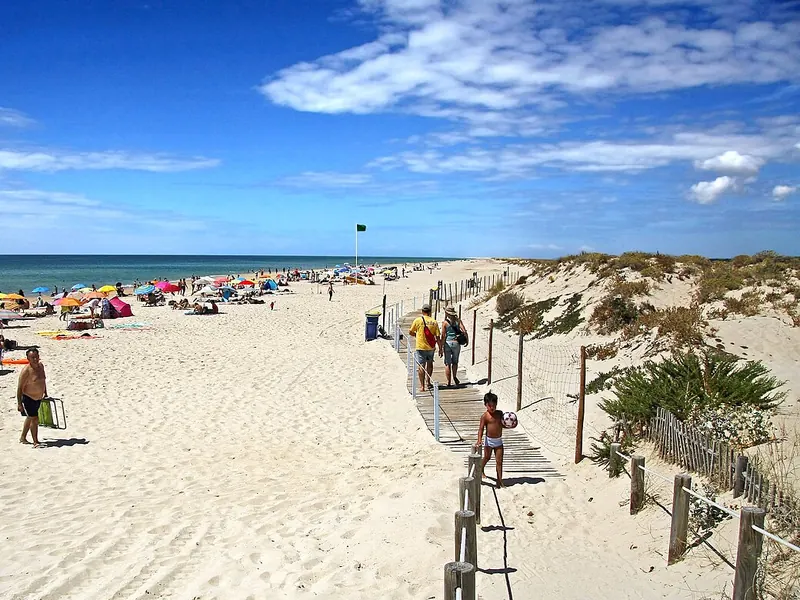 Warmest on the mainlandPraia do Barril · Vitor Oliveira, CC BY-SA 2.0
21.5°C off Faro in August, 22.0°C in Tavira. The east is warm and calm; the west is a degree or two cooler and clearer.
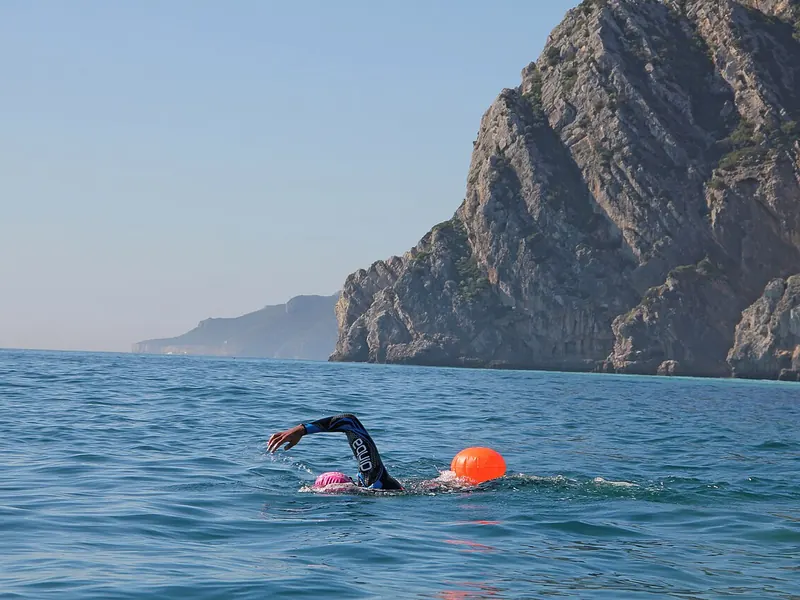 The warm pocket near LisbonSwimming off Sesimbra · Andrefs9, CC BY-SA 4.0
18.7°C in August off Cascais, a little more in Sesimbra, tucked behind the Arrábida hills. Fine for a swim, bracing for a long one.
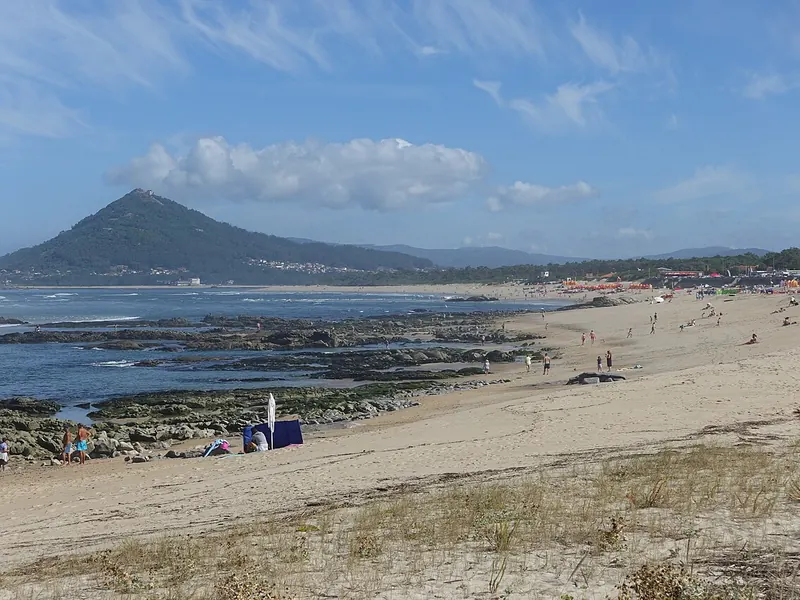 Coldest waterPraia de Moledo · Joseolgon, CC BY-SA 4.0
17.3°C in August, the coldest summer sea in Portugal. Come for the city, the wine and the long beaches; swim fast or wear a wetsuit.
Nazaré and Peniche average 18.7 and 18.6°C in August, with the biggest waves in Europe. Great for surfing, but a wetsuit is not optional. Surfing in Portugal
Plain words for each season, and one thing worth booking.
July to September
18.5–23.7°C
The Algarve, Sesimbra, Madeira and the Azores are all at their best. North of Nazaré the sea still stays under 18.7°C.
Benagil caves by boatOctober and November
18.9–22.8°C
October is warmer than June on every coast. By November only Madeira and the Azores are still above 19°C.
Dolphin watching in MadeiraDecember to April
17.9–19.9°C
The mainland drops to 13–16°C. Funchal stays near 18–20°C, and many hotels heat their sea-water pools.
Hotels in FunchalMay and June
18.0–20.9°C
The Algarve east and Madeira warm up first. June feels colder than its numbers on the west coast.
Ria Formosa boat tripsAll year, north of Nazaré
13.2–17.4°C
Viana and Porto never pass 17.4°C. The surf is excellent and the schools lend the wetsuit.
Surf lessons in PortoMadeira and the Azores. Funchal averages 23.7°C in September and Ponta Delgada 23.2°C in August. On the mainland, the eastern Algarve is warmest: 21.5°C off Faro and about 22°C in Tavira in August. Source: NOAA OISST v2.1, 1991–2020.
Not really. Off Cascais it averages 18.3–18.8°C from July to September, and Sesimbra is slightly warmer. It is fine for a swim, cold for a long one.
In summer the north wind pushes warm surface water offshore and cold water rises from below (coastal upwelling). That keeps Porto at about 17.3°C in August, 4.2°C colder than Faro.
In Madeira, yes: the sea stays around 17.9–19.9°C from December to April. On the mainland it is 13–16°C, so most people wear a wetsuit or stay on the sand.
In August and September, at about 17.3–17.4°C. The coldest month is February, at 13.2°C.
They are 30-year averages from NOAA OISST v2.1 (satellites and buoys, 0.25° grid). For June 2000–2020 our figures match the Portuguese Navy buoys at Leixões (16.6 vs 16.6°C) and come within half a degree at Sines (18.0 vs 17.5°C) and Faro (19.9 vs 19.6°C), where the buoys sit closer to the shore. On any given day the sea can be a couple of degrees above or below the average.
Madeira is the one place in Portugal where the sea is warm in every month. Pick a free-cancellation rate and the plan can still change.